
The Two-Person UK 3D Studio Betting on the future of YC Hardtech and the Physical AI Era in San Francisco
When Neuron Industries prepared to announce its $10 million seed round, the 3D film was being built by two people working from the UK.
The company was developing a new approach to industrial automation. Our job was to give its ambition a public form, from a short funding announcement to a longer company film and an adaptation designed for a Times Square billboard.

We are those two people: Allan Rowland and Arran Clark at LiveUP Media. We have chosen to build our studio around hardtech founders developing new machines, manufacturing methods and physical infrastructure. We work with teams across Silicon Valley, the San Francisco Bay Area and Los Angeles, including Y Combinator startups.
Neuron brings that choice into focus. A small industrial controller, a substantial new round of investment and a much larger question about who gets to build the next generation of factories.

Backing the physical AI era
We are putting the direction of our own business behind these founders. Their work is where we want to spend our time.
There is a particular instinct we recognise: someone encounters a process that takes too long, a machine that cannot do what they need, or a capability they cannot access. They decide to build another answer.
That is the work drawing us towards advanced manufacturing and physical AI. It changes what can be made, where production can happen and how much control engineers have over the systems they depend on.

The wider ambition is visible in Y Combinator’s Techno-Industrialist request for startups, which calls for founders to apply modern software capabilities across industrial production, from energy and materials to manufacturing.
For us, it raises an editorial question every time we begin a film: what does this particular piece of engineering change?
The industrial consequence of a controller
Neuron Industries, a YC Summer 2026 company based in Gardena in the Los Angeles area, announced its $10 million seed round on 29 October 2026. FCVC and Obvious Ventures co-led the round.
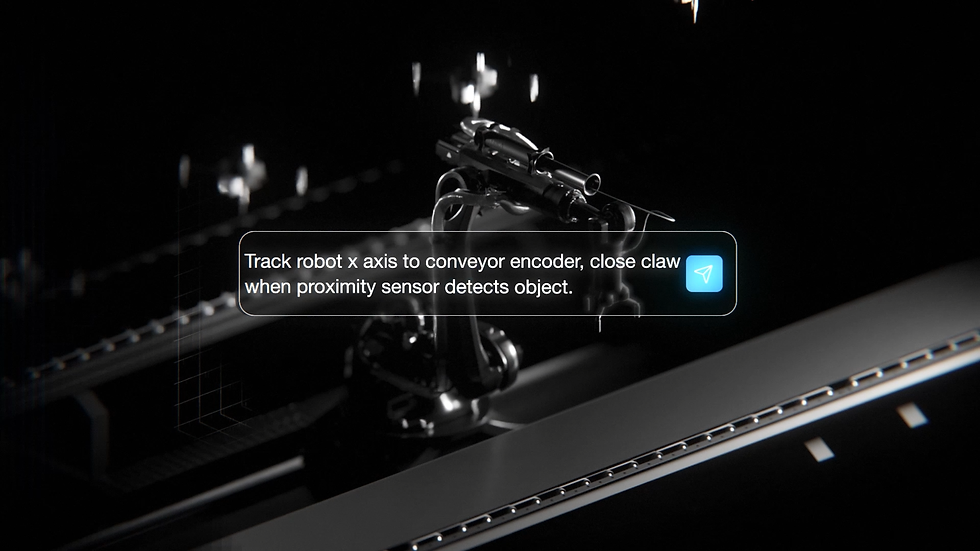
Its Cortex AI Controller and Synapse development environment are designed to let engineers describe machine behaviour in plain English, generate readable control code and test it before deployment. Engineers can inspect and modify what the AI produces.
That is the technical starting point. The commercial significance reaches into the effort required to bring new machines and production equipment into operation.
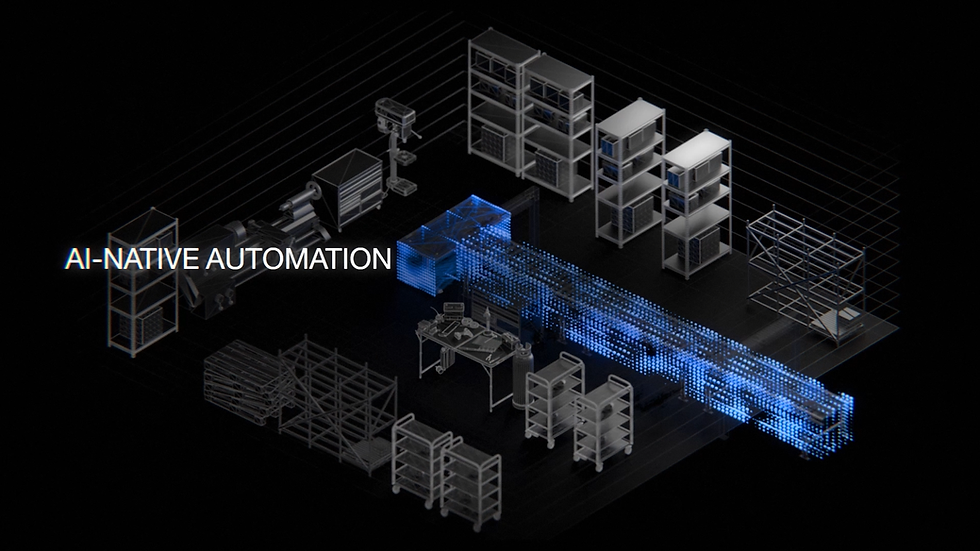
For the film, we followed that significance across manufacturing, energy systems and critical infrastructure. The controller became the starting point for a larger industrial world.
Neuron’s founders had described needing help stepping back from the engineering to see that bigger picture. That is an editorial responsibility: deciding which part of the technology introduces the company, which applications establish its reach, and what a viewer should understand about its ambition.

We want someone encountering the business for the first time to see the opportunity the founders are working towards.
An outside perspective with technical roots
The distance between our UK studio and California gives the working relationship an unusual geography. The connection comes through the problems and the people.
Both of us have backgrounds in computing and technical systems. We enjoy getting far enough into the engineering to understand why a founder thinks a different approach is necessary.
Then we zoom out.

A company film has to make decisions about scale. It can stay close to an individual component, or follow the capability into the environments and industries it could affect. Choosing where to move between those views shapes how the whole company is understood.
That perspective is part of what founders bring us in to provide. We take responsibility for the framing as well as the production.
Two people with room to experiment
I am 39. Arran is 25. I came through programming, computing and technical systems; Arran brings a background in computing and motion design.
Our different experience feeds into the work. Arran develops scenes through experimentation in Blender, testing objects, effects, materials and movement as the direction takes shape. We discuss what those experiments communicate and how they belong in the larger film.
For Neuron, that work included robotics, industrial environments and containerised manufacturing. In our studio conversation about the project, Arran discusses the lighting, materials and robot-arm point-of-view shot. We also look at pacing, readable text and the decisions behind the edit.
Experimentation gives us possibilities. Restraint determines which ones survive.
We do not put everything on screen just because it took work to build.
An intricate detail can still be wrong for a particular moment. A scene can be visually interesting and still distract from the company’s ambition. Those are decisions we have to be willing to make.
A short announcement with a much bigger job
The Neuron commission began with a 15-second funding announcement. It developed into a longer 3D company film, with a separate adaptation prepared for a Times Square billboard.
An announcement has several jobs at once. It introduces the milestone, gives the company a public identity and creates a first impression for people encountering it through the launch.
That makes the choices consequential. How much can someone read? Where does the controller appear? When do we move out into the wider industrial environment? What deserves another second, and what should disappear?
The film has to hold together while carrying very little text.
Our work covered the research, messaging, design, 3D animation and sound. We worked from the brief and engineering material, including CAD files, and took the production through to a first draft for the founders to respond to.
They could keep building while we built the film.

The conversations behind the company film
The recorded conversation opens up the decisions behind the finished work. It lets founders hear how we think about the relationship between a product, its commercial potential and the company introducing it.
That is useful context when choosing a team for a launch. The finished film shows the result. The discussion shows some of the judgement that produced it.
Neuron sits alongside our films for Lightmill, Uplift Microhome and PAKT3D. Different technologies have brought us back to the same question: what becomes possible when this capability reaches the people who need it?
That is the business we are building at LiveUP Media.
Our startup video production covers 3D company films, launch videos and funding announcements for YC and hardtech teams across Silicon Valley, the San Francisco Bay Area and California.
If you are building something that changes how an industry works, tell us what is happening.
